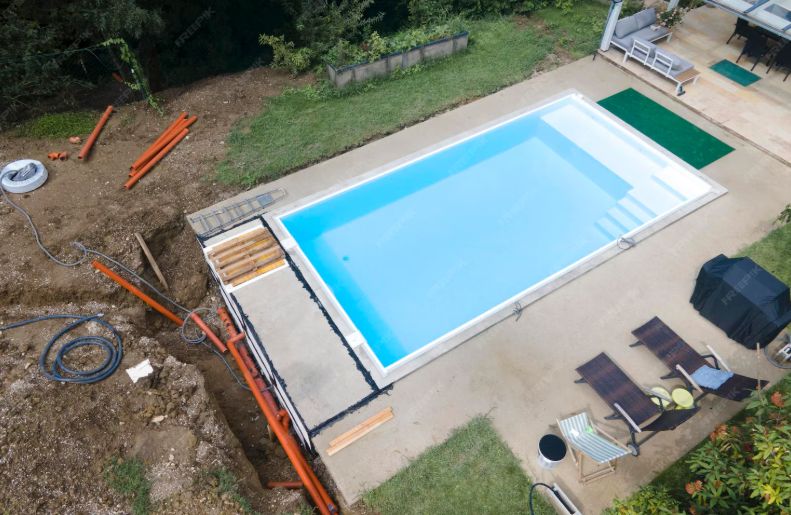
Swimming pool construction in Ghana is a technical project that requires proper planning, skilled execution, and professional supervision. Unfortunately, many pools in Ghana fail because critical steps are skipped or poorly handled.
Need quality swimming pool services? Call us now: 024 551 4382
In this guide, Emmaco Pool & General Construction explains the complete step-by-step swimming pool construction process in Ghana, helping homeowners, hotels, and developers understand what to expect and how to avoid costly mistakes.
Step 1: Site Inspection and Assessment
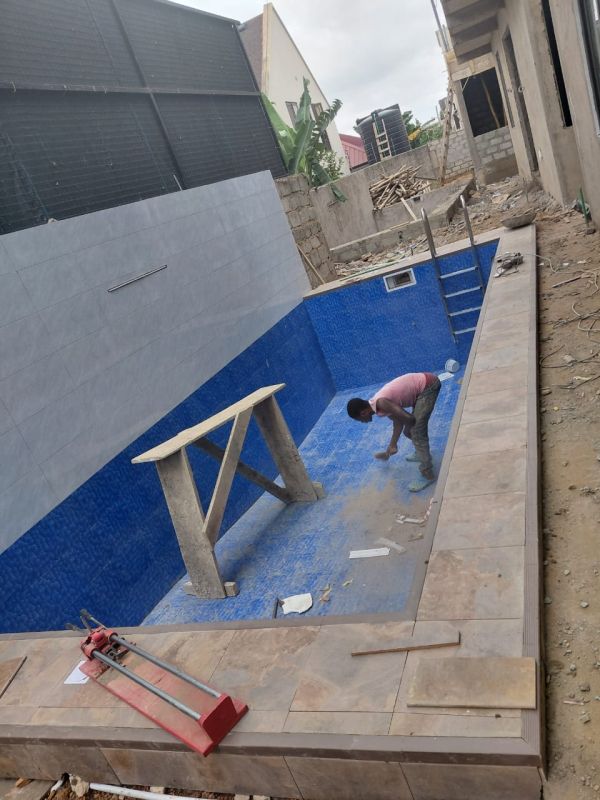
Every successful swimming pool project begins with a professional site inspection. At this stage, we assess:
- Available space and layout
- Soil type and ground condition
- Accessibility for machinery
- Water source and drainage
- Client’s design preferences and budget
This step helps determine the best pool type, size, and positioning. Skipping proper inspection often leads to structural problems, leaks, and poor water circulation later.
Step 2: Pool Design and Planning
After inspection, a detailed pool design and layout is prepared. This includes:
- Pool dimensions and depth (shallow and deep ends)
- Skimmer or overflow system design
- Inlet and outlet positioning
- Steps, seating, and safety features
- Plumbing and electrical layout
Proper planning ensures the pool functions efficiently and meets both aesthetic and safety standards.
Step 3: Excavation
Excavation involves digging the pool area to the approved dimensions and depth. This process must be done carefully to:
- Maintain accurate pool shape
- Avoid weakening surrounding soil
- Prepare a stable foundation
In Ghana, excavation cost and method may vary depending on soil type, rocky ground, or water table level.
Step 4: Structural Framework (Steel Reinforcement)
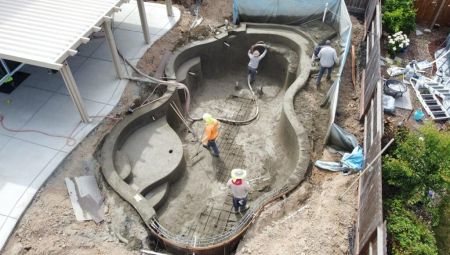
Steel reinforcement is installed to give the pool strength and durability. This includes:
- Floor reinforcement
- Wall reinforcement
- Beam and coping reinforcement
Proper steel spacing and tying are critical. Poor reinforcement is one of the major causes of cracks and structural failure in swimming pools.
Step 5: Plumbing and Hydraulic Installation
This is one of the most important stages of swimming pool construction. It includes:
- Installation of skimmers
- Inlet positioning for water circulation
- Vacuum points for cleaning
- Main drain (where applicable)
- Pipe routing to pump and filter room
Correct plumbing ensures:
- Balanced water circulation
- Efficient filtration
- Easy maintenance
Improper plumbing leads to stagnant water, dirty pools, and high maintenance costs.
Read also: Swimming Pool Construction Cost in Ghana (2026 Complete Guide)
Step 6: Concrete Casting (Shell Formation)
Concrete is poured to form the pool shell (floor and walls). This stage must be:
- Properly mixed
- Correctly cured
- Carefully leveled
Concrete strength determines the pool’s lifespan. Rushed or poorly mixed concrete often results in cracks and water leakage.
Step 7: Waterproofing
Waterproofing protects the pool structure from leaks and water loss. This includes:
- Application of professional waterproofing materials
- Sealing of joints and pipe penetrations
- Pressure testing before finishing
Waterproofing is not optional. Skipping this step causes long-term leakage problems that are expensive to fix.
Step 8: Tiling and Finishing
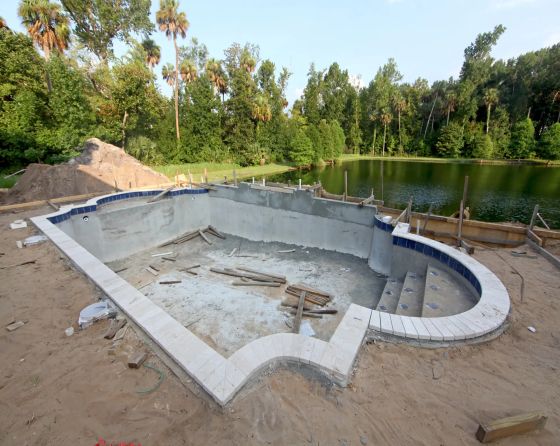
This stage gives the pool its final appearance. It includes:
- Installation of pool tiles (ceramic, mosaic, or glass)
- Coping stones around pool edges
- Decking or paving
- Installation of steps and seating
Quality finishing improves beauty, comfort, and safety.
Step 9: Electrical Works and Pool Lighting
Electrical installation includes:
- Underwater LED lights
- Power supply to pumps and filters
- Control systems
Proper electrical work ensures safety, night visibility, and an attractive pool atmosphere.
Step 10: Equipment Installation
Pool equipment is installed and tested, including:
- Pumps
- Filters
- Valves
- Control panels
Correct equipment sizing ensures efficient water circulation and energy savings.
Step 11: Testing, Balancing, and Commissioning
Before handover:
- Plumbing lines are tested
- Equipment is run and adjusted
- Water is filled and chemically balanced
- Safety and functionality checks are completed
This ensures the pool is ready for safe use.
Step 12: Client Handover and Maintenance Guidance
The final step includes:
- Explaining pool operation
- Maintenance training
- Safety advice
- Optional maintenance contract
A professional company doesn’t disappear after construction — it supports the client long-term.
Common Mistakes to Avoid During Pool Construction in Ghana
- Poor skimmer and inlet placement
- Skipping waterproofing
- Using low-quality materials
- Hiring unqualified artisans
- Ignoring professional supervision
These mistakes lead to early pool failure and expensive repairs.
Why Choose Emmaco Pool & General Construction
At Emmaco Pool & General Construction, we follow industry best practices at every stage:
- Proper inspection and planning
- Skilled workmanship
- Quality materials
- Accurate plumbing and leveling
- Reliable after-service support
We build pools that are functional, durable, and beautiful.
Your Swimming Pool Construction in Ghana Starts Now
Whether you’re planning a residential or commercial swimming pool, professional guidance makes all the difference.
📞 Contact Emmaco Pool & General Construction today
📍 Serving Accra and across Ghana
📩 Book a site inspection and consultation: 024 551 4382